

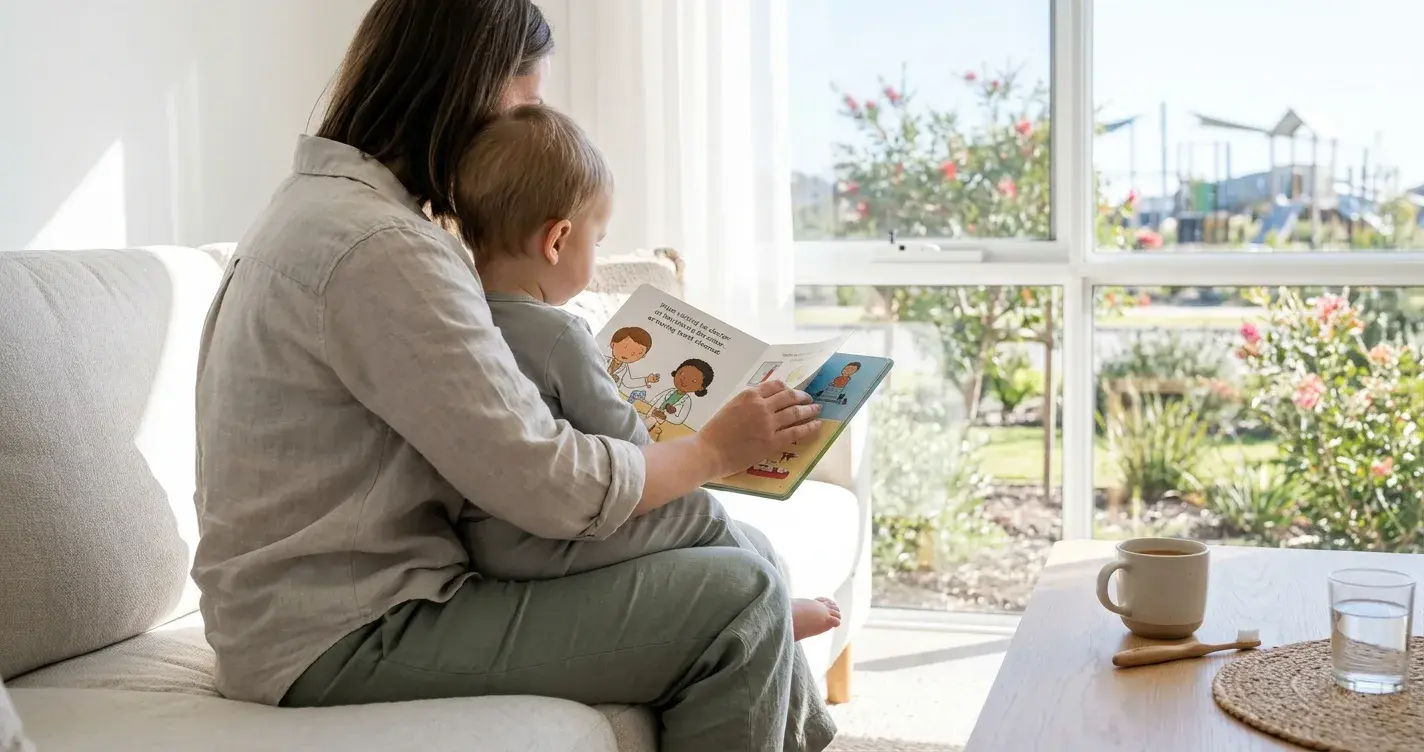
If you've just had your first baby or you're watching those tiny teeth come through, you've probably wondered when should a child first see a dentist. It's one of the most common questions new parents in Eglinton, Alkimos and Butler ask us. The good news is the answer is simple, and the first visit is nowhere near as daunting as it sounds.
At Eglinton Dental Care we see plenty of toddlers for their very first check-up. This guide covers the age dentists recommend, what actually happens at that first appointment, and a few easy ways to help your little one feel settled before they even sit in the chair.
At what age should a child first see a dentist?
According to the Australian Dental Association NSW, a child's first dental visit should occur when the first baby tooth comes through or by one year of age, and at least every 12 months after that. So the simple rule is: first tooth, or first birthday, whichever comes sooner.
This often surprises parents. Many assume dental visits start once a child has a full set of teeth, or once they start school. In reality, teeth can start appearing anywhere from around six months onward, which is exactly why the guidance ties the first visit to that first tooth rather than to a set age. The point of the visit isn't to find a problem. It's to check everything is tracking normally and to help you feel confident about caring for those new teeth at home.
If your child is already two, three or older and hasn't been to a dentist yet, there's no need to worry. It's never too late to book that first visit, and our team will simply start from wherever your child is at.
Why the first visit happens so early
It can feel strange booking a dental check-up for a baby with only a couple of teeth. But baby teeth matter more than they're often given credit for. They help with eating, speaking clearly and holding space for the adult teeth coming later.
Seeing a dentist early means small issues can be picked up and talked through before they turn into bigger ones. It also means your child gets used to the sounds, the chair and the whole experience long before there's ever a reason to feel nervous about it. Starting early is really about building a habit, for both you and your child.
What happens at your child's first dental visit
First visits are kept short, calm and low-key. There's no pressure for your child to sit still for long, and most of the appointment is a gentle look rather than any kind of treatment.
Generally, you can expect the dentist to:
- Have a look at your child's teeth, gums and jaw development
- Check how teeth are coming through and whether anything needs watching
- Talk with you about brushing technique, diet, bottles, dummies or thumb sucking
- Answer any questions you have about teething, habits or general oral care
Depending on your child's age and what suits them, the dentist will talk through what's appropriate for their stage, including things like fluoride use and good habits at home. Our children's dentistry approach is all about going at your child's pace, explaining things simply and keeping the whole experience relaxed rather than clinical.
For toddlers, sometimes you'll sit with your child on your lap facing the dentist, rather than having them go into the chair alone. Whatever feels most comfortable for your family is the starting point, and our team will work with that.
Getting your toddler ready for their first visit
A little preparation goes a long way. Here are some simple things that help:
- Talk about the visit using easy, positive words like "counting teeth" rather than anything that sounds scary
- Avoid words like "hurt", "needle" or "pain", even if you're trying to reassure them
- Practise at home by having your child open wide so you can "count their teeth" with a soft toothbrush
- Book a time when your toddler is usually well-rested and not due for a nap or feed
- Bring a favourite toy or comfort item along for the visit
- Stay calm yourself. Toddlers often pick up on how the adults around them are feeling
There's no need to over-explain or build it up too much beforehand. Keeping things low-key usually works best.
What to bring and what it costs
Bring your health fund card if you have one. Most private health fund rebates can be claimed on the spot through HICAPS, and you simply pay the gap amount owing.
Many children are eligible for bulk-billed dental care under the Medicare Child Dental Benefits Schedule. Eligibility depends on your family's circumstances and Family Tax Benefit status, so it's worth checking your child's eligibility directly with Services Australia before your visit.
Every family's situation is different, so costs can vary depending on what's needed. Our team always talks you through the treatment plan and the costs involved before anything goes ahead, and you're welcome to ask for item numbers to check against your fund. There's never any pressure to proceed on the day.
Ongoing check-ups for growing families
Once that first visit is done, regular check-ups become part of the routine. Our check-ups and cleaning service is designed to catch small things early and keep the whole family's teeth on track, well before anything becomes uncomfortable or urgent.
If you're new to the area and still working out who to see, choosing a dentist close to home in Eglinton, Jindalee or Merriwa makes those regular visits much easier to stick to as your kids grow. You can find answers to common questions about visiting us, including what to expect and how appointments work, on our FAQ page.
Frequently asked questions
When should a baby first see a dentist?
The Australian Dental Association recommends a baby's first dental visit happen when their first tooth appears, or by their first birthday at the latest, whichever comes first. After that, check-ups every 12 months are recommended.
What if my child cries or won't open their mouth?
This is completely normal and nothing to worry about. Our team explains each step as we go and works at your child's pace, so there's no pressure to rush anything.
Does a one-year-old really need a dental check-up?
Yes. Even with just a few teeth, an early check lets the dentist look at development and give you guidance on brushing, diet and habits like dummy use, before small issues have a chance to develop.
How often should kids have a dental check-up after the first visit?
Generally every six to twelve months, though your dentist will let you know what suits your child based on their teeth and any particular risk factors.
What if we've already missed the recommended age?
Don't stress about it. It's very common, and it's never too late to book your child's first visit. Our team will simply start from where your child is at now.
If you're ready to book your child's first dental visit, or it's time for their next check-up, give Eglinton Dental Care a call on 08 9564 1007 or choose a time online through our online booking page. Our team at Eglinton Dental Care is here to make that first visit calm, friendly and easy for the whole family.
