
Brushing a toddler's teeth can feel like a wrestling match some days. One minute they're happy to hold the toothbrush, the next they're clamping their mouth shut and turning their head away. If this sounds familiar, you're not alone, and at Eglinton Dental Care we hear this from local parents all the time.
This guide walks you through how to brush toddler teeth properly, from the right amount of toothpaste to positions that make the job easier, and a few things to try when your toddler just won't cooperate.
How to brush baby teeth from the very first tooth
As soon as the first tooth appears, usually around 6 months of age, brush gently with a soft children's toothbrush and water, or use a soft wet cloth to wipe over teeth and gums. You don't need toothpaste yet at this stage.
Clean all surfaces of the teeth and gums twice a day, in the morning and before bed at night. Getting into this habit early, even before all the teeth have come through, helps your child get used to having their mouth cleaned as part of the daily routine.
How much toothpaste for toddlers is actually needed
This is one of the most common questions we get asked, and it's an easy one to get wrong if you're going on what you see in toothpaste adverts. The honest answer is: toddlers need far less toothpaste than most people think.
According to Victoria's Better Health Channel, the guide is straightforward. For children 0 to 18 months of age, use only water, no toothpaste. From 18 months until the child turns six years old, use a pea-sized amount of children's toothpaste that contains fluoride, which has a lower level of fluoride than standard toothpaste. From six years of age, use a pea-sized amount of standard fluoride toothpaste.
The raisingchildren.net.au network, developed with Australian paediatric and health bodies, gives similar guidance: from 18 months to 3 years, you can start using a pea-sized amount of low-fluoride toothpaste, unless a dentist recommends otherwise. If you're ever unsure which toothpaste suits your child's age or what amount is right for their stage, our team can talk you through it at a check-up, and you can always ask us directly.
Once toothpaste is introduced, get your toddler to spit it out, and there's no need to rinse after brushing, because the fluoride toothpaste left behind protects your toddler's teeth.
How long to brush toddler teeth
Brush the teeth and along the gum line to clean every tooth thoroughly, with about two minutes being a good guide. Two minutes can feel like a long time to a wriggly toddler, so don't worry if you're not hitting that exactly every single time, especially in the early days. Consistency matters more than perfection here.
When it comes to technique, brush gently in small circles, along the inside surfaces and the outside surfaces of teeth, and back and forth on the chewing surfaces. If your toddler has an electric toothbrush, read the instructions first, guide the brush to your child's teeth before switching it on, move the head slowly from tooth to tooth including along the gum line, and don't press too hard or scrub, just let the brush do the work.
Positions that make toddler brushing easier
How you position your toddler can make a real difference to how smoothly brushing goes. A few things worth trying:
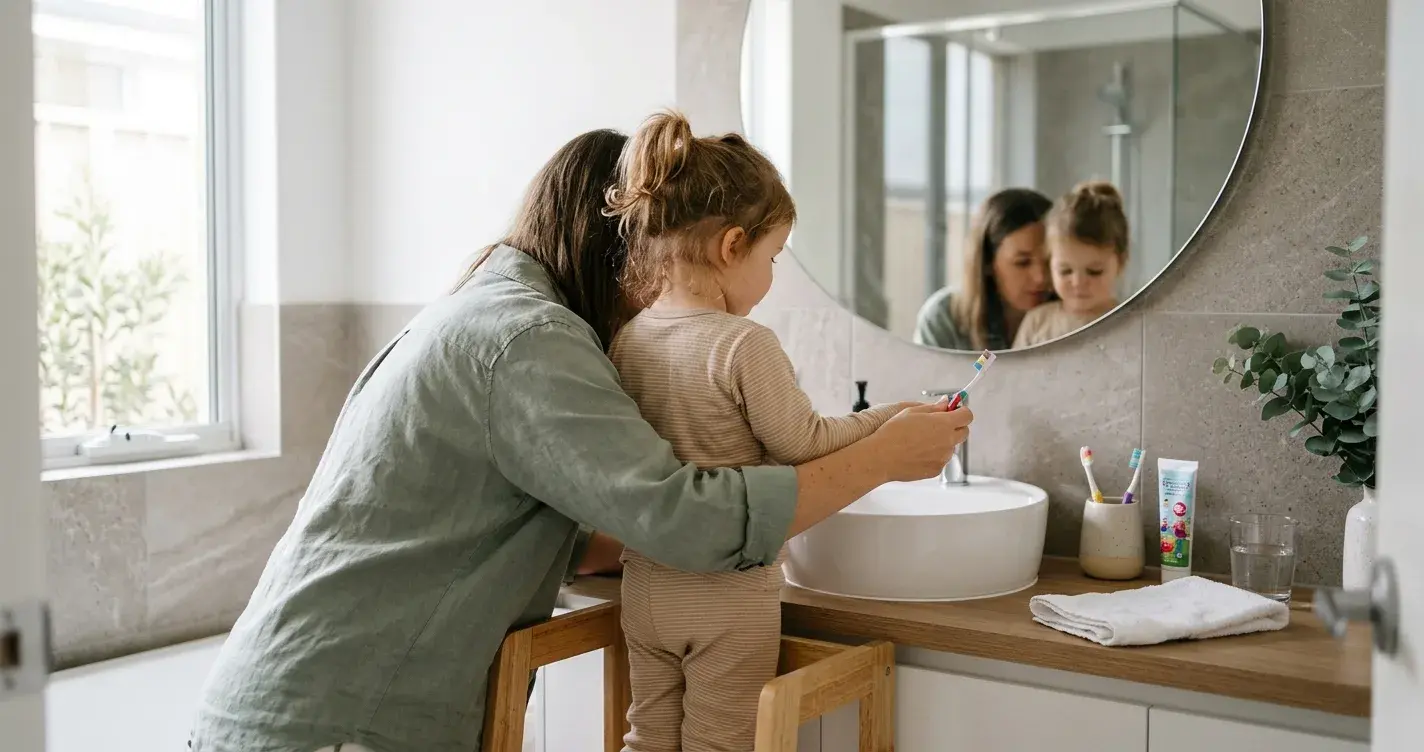
- Stand or sit behind your toddler so they feel secure, or try brushing in front of a mirror, which also lets you see into your toddler's mouth.
- Cup your toddler's chin in your hands with their head resting against your body.
- Try sitting on the bathroom floor or bed with your toddler lying across your lap, head tilted back slightly, so you have a clear view and steady hands.
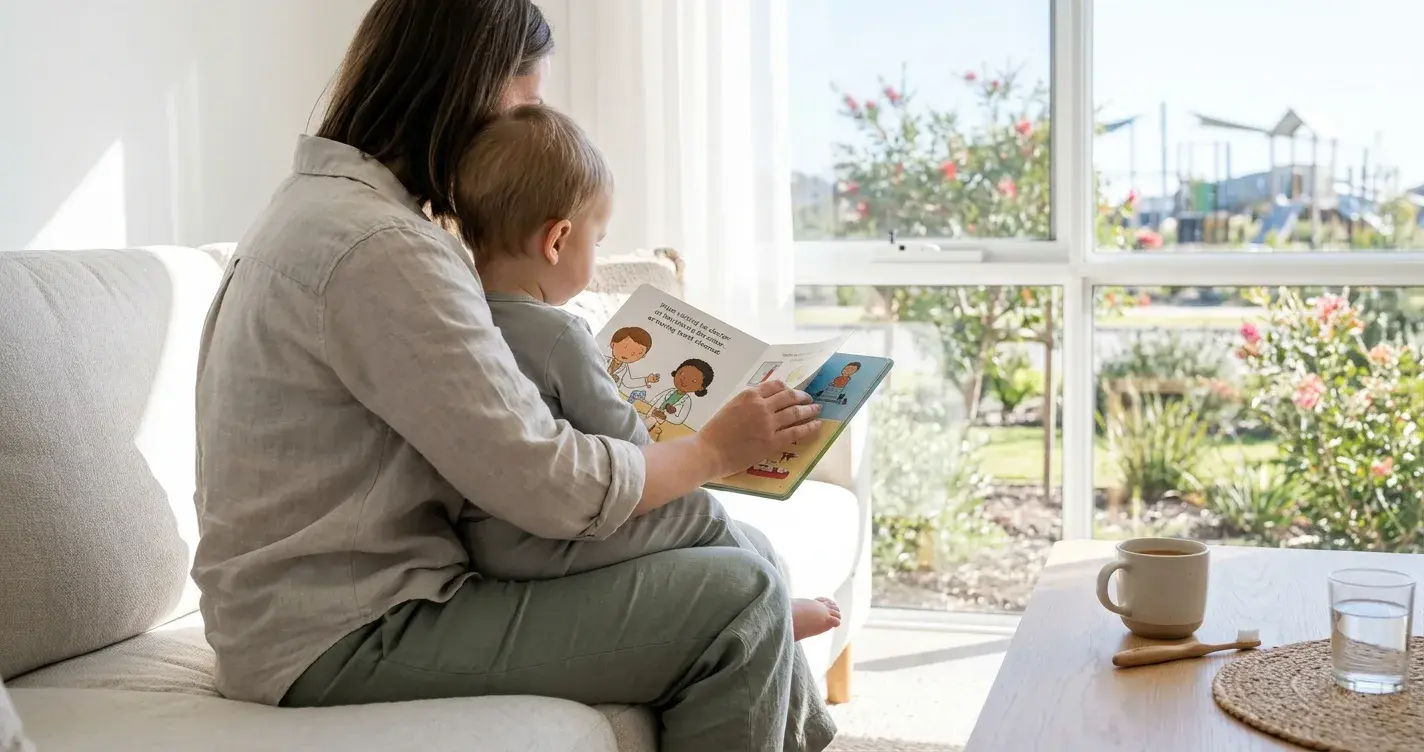
Some families find it easier to brush in the lounge room rather than standing at the basin, especially if your toddler associates the bathroom with being rushed before bed.
How to brush toddler teeth when they refuse
Almost every parent deals with a toddler who suddenly decides brushing is the worst part of their day. Toddlers often don't want to spend time brushing their teeth, but even a quick brush is better than no brush at all, and it helps your toddler learn that brushing teeth is part of the daily routine.
A few ideas that often help when you're trying to brush toddlers teeth without a fight:
- Try using two toothbrushes, one for your toddler to hold and use and one for you to brush properly, or try a "your turn, my turn" approach where the child brushes first then the parent brushes.
- If your child doesn't like the taste of toothpaste, try brushing without toothpaste first.
- Let them choose their own toothbrush, within reason. A favourite colour or character can make a surprising difference.
- Sing a short song or count out loud so they know roughly when brushing will finish.
- Stay calm and matter-of-fact, even on the tough days. Toddlers pick up on tension, and a relaxed approach from you often settles them down faster than firm words.
If brushing is a daily battle no matter what you try, it's worth mentioning this at your child's next check-up. Our team can suggest other approaches and check there's nothing else going on, like sensitive gums or teeth that are due to come through.
Why regular dental visits still matter
Good brushing at home goes hand in hand with regular dental check-ups. These visits let us keep an eye on how your toddler's teeth are developing, pick up any early signs of decay, and give you a chance to ask questions about brushing, diet or anything else on your mind.
If your little one hasn't seen a dentist yet, it's worth reading about when a child should first see a dentist, which covers what to expect and why earlier is better than later. Our children's dentistry appointments are relaxed and unhurried, and we explain every step as we go so your child knows what's happening.
Regular check-ups and cleaning appointments also give our team the chance to spot early decay before it becomes a bigger problem, which usually means simpler, smaller treatment down the track. Bring your health fund card along if you have one. Most private health fund rebates are claimed on the spot through HICAPS, and you simply pay the gap.
Frequently asked questions
When should I start brushing my toddler's teeth?
As soon as the first tooth appears, usually around 6 months of age, start brushing gently with a soft children's toothbrush and water, or wipe over teeth and gums with a soft wet cloth. Don't wait until all the baby teeth are through.
Is it normal for a toddler to swallow toothpaste?
It's common for toddlers to swallow a little toothpaste while they're learning to spit, which is exactly why the recommended amounts are so small. Keep an eye on how much toothpaste goes on the brush and encourage spitting rather than swallowing whenever you can.
Should I brush my toddler's teeth or let them do it themselves?
Your toddler can start helping to clean their teeth at around 2 years of age, but they still need you to brush properly afterwards. Toddlers don't yet have the coordination to clean every surface well, so think of their turn as practice and your turn as the one that really gets the teeth clean.
What if my toddler's gums bleed a little when I brush?
A small amount of bleeding can happen if gums are a bit inflamed or if brushing is new to your toddler. If it continues for more than a few days, or seems to be getting worse, it's worth mentioning at your next check-up rather than guessing what's going on.
How do I know if my toddler is brushing for long enough?
About two minutes is a good guide for brushing thoroughly, though with toddlers this often happens in short bursts rather than one long session. Playing a short song or using a simple timer can help make two minutes feel less like a chore.
Brushing a toddler's teeth well doesn't need to be complicated, even if some days feel harder than others. Small, consistent habits now, plus regular dental visits, set your child up for a healthier smile as they grow. If you'd like some guidance tailored to your toddler, or you simply have questions about toothpaste, technique or timing, our team at Eglinton Dental Care is happy to help. You can check details on our FAQ page, call us on 08 9564 1007, or book an appointment online at a time that suits your family.