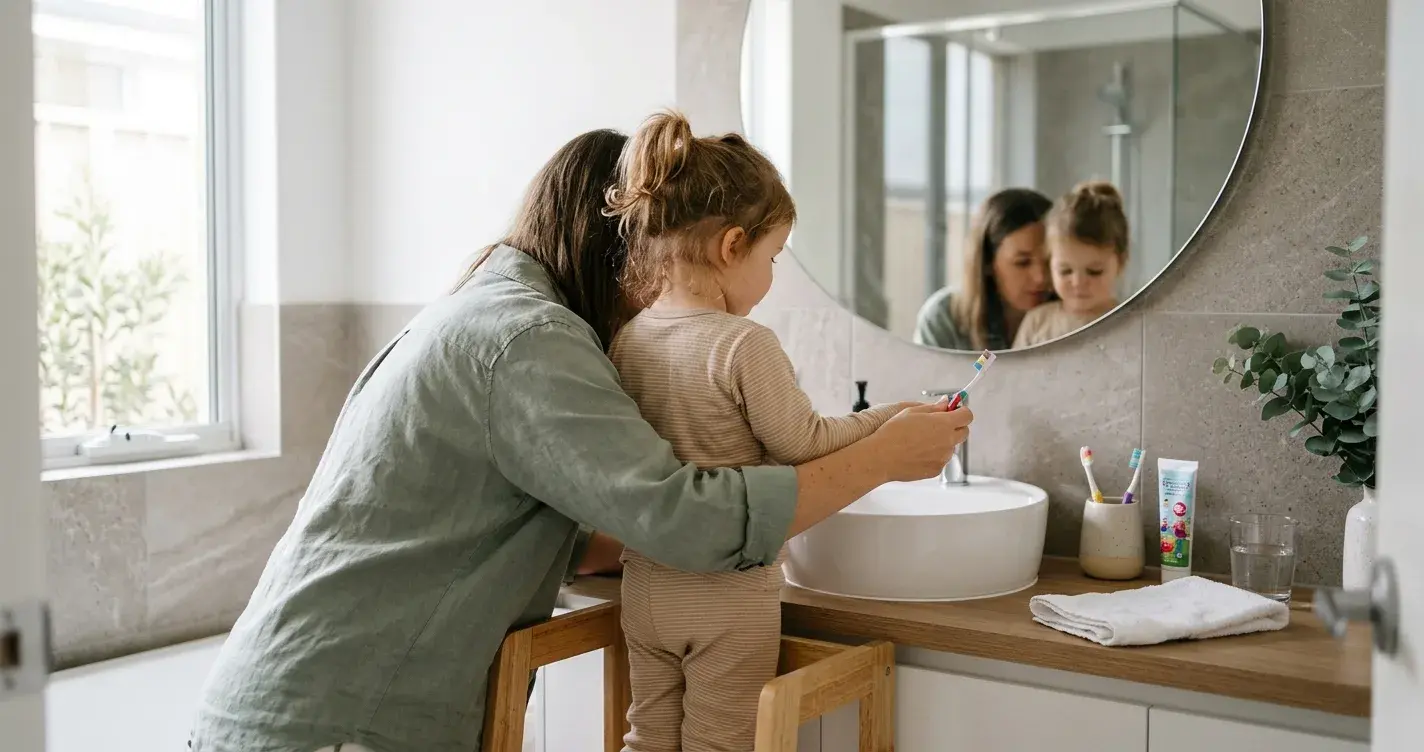


If your child has just wiggled their first loose tooth, you probably have questions. When do baby teeth fall out, exactly? Is it normal if one comes out early, or if nothing has budged by age eight? At Eglinton Dental Care, we get asked this all the time by families across Eglinton, Alkimos, Butler and Jindalee. Here's what's typical, what to do about a loose tooth, and when it's worth getting a dentist to take a look.
When do baby teeth fall out? The usual age range
Most children start losing their baby teeth from around six years old, though every child is a little different. According to the WA Department of Health, children usually lose all their baby teeth between 6 to 12 years of age. Gradually the teeth become loose in the gum and fall out. The teeth usually fall out in the same order in which they appear.
So if your child got their first tooth early or late as a baby, the same pattern often plays out again when teeth start to loosen. There's a wide range of normal here, and a few months either way is nothing to worry about.
Baby teeth falling out in order
One of the most common questions we hear is about the order baby teeth come out in. The good news is it's fairly predictable, because teeth tend to leave in roughly the order they arrived.
Front teeth (central incisors) first
The bottom front two teeth are usually the first to wiggle loose, often followed soon after by the top front teeth. This is the classic gap-toothed school photo stage, and for most kids it happens around six to seven years old.
Lateral incisors next
The teeth either side of the front ones, called lateral incisors, are usually next. This tends to happen a year or so after the front teeth, often somewhere between seven and eight years of age.
First molars and canines
The back chewing teeth (first molars) and the pointy canine teeth usually start loosening from around nine years old. These don't always come out in a strict order, and that's completely normal.
Second molars last
The second molars, right at the back, are generally the last baby teeth to go. This usually happens somewhere between ten and twelve years old, rounding out the full set of baby teeth falling out.
By the early teenage years, most children have a full set of adult teeth. A few can take a little longer, and that's usually nothing to be concerned about.
Baby teeth falling out early: is it a problem?
Baby teeth falling out early can happen for a few reasons. Sometimes it's just how that particular child is built. Other times it follows a knock to the mouth, or tooth decay that has affected the roots.
Baby teeth do more than just help with eating. They hold space in the jaw for the adult tooth waiting underneath. When a baby tooth is lost well before it's due, the teeth next to the gap can sometimes drift into the space, which may crowd the adult tooth when it's ready to come through.
This is one of the reasons regular check-ups matter, even for baby teeth. If your child loses a tooth early from an injury or decay, it's worth getting it checked so the dentist can see whether anything needs monitoring as the adult tooth develops. Our children's dentistry page has more on how we support kids through each stage of their dental development.
What if teeth are falling out late?
Some children are simply a little later to lose their first tooth, just as some were later to get their first tooth as a baby. If your child is around seven or eight with no loose teeth at all, it's worth mentioning at their next check-up, but it isn't automatically a sign of a problem.
A dentist can take a look and, if needed, suggest an X-ray to check that the adult teeth are developing normally underneath. In most cases, it's just a timing difference rather than anything to be concerned about.
Loose tooth: what to do
When your child tells you a tooth feels wobbly, the simplest approach is usually the best one. Here's what we generally suggest:
- Let your child gently wiggle the tooth with a clean finger or their tongue, rather than forcing it.
- Keep brushing twice a day, going a little more gently around the wobbly tooth.
- Offer softer foods for a day or two if chewing feels uncomfortable on that side.
- Avoid pulling the tooth out with string or fingers before it's ready.
- If there's a little blood when it finally comes out, a clean, damp cloth held gently on the spot for a minute or two usually settles it.
Most loose baby teeth sort themselves out without any help needed. If your child is uncomfortable, following the directions on the pack for pain relief, or asking your pharmacist, is a sensible first step.
When a loose tooth needs a dentist
Most wobbly teeth are perfectly normal and nothing to worry about. But there are times when it's worth getting a dentist to check things over:
- The tooth became loose after a fall, knock or sports injury.
- A back tooth is loose but no front teeth have come out yet.
- There's swelling, a fever, or pus near the loose tooth.
- An adult tooth is coming through before the baby tooth has come out.
- Your child is in pain that doesn't settle.
If your child ever has spreading facial swelling, a fever, trouble breathing or swallowing, or bleeding that won't stop, that calls for urgent care at a hospital emergency department rather than waiting for a regular appointment.
For everyday concerns, at Eglinton Dental Care we keep some appointments free each day, so same-day care for dental concerns is often possible. We'll never promise a particular time slot, but we do our best to see kids who need a quick check.
How we help kids through this stage
Modern dentistry with a gentle touch is how we approach every visit, especially for younger patients. Our team explains what's happening in simple terms your child can understand, goes at their pace, and lets them ask to stop at any point if they feel unsure.
For some treatments we can use a digital scanner instead of the old-style impression trays, which many kids find more comfortable. If your child ever needs orthodontic advice down the track, we check the bite and talk through options, including clear aligners, or a referral to an orthodontist if that's the better path.
Every treatment plan is talked through with you first, with the costs explained clearly before anything goes ahead. There's no pressure to proceed on the day. Bring your health fund card along to your appointment; most private health fund rebates are claimed on the spot through HICAPS, and you simply pay the gap. If your child is eligible, bulk-billing under the Medicare Child Dental Benefits Schedule may apply, and our front desk can talk you through how that works for your family.
You can read more about our approach on our about page, or check our FAQ page if you have other questions before booking.
Frequently asked questions
What age do baby teeth usually start falling out?
Most children lose their first baby tooth from around six years old, usually one of the bottom front teeth. Some children start a little earlier or later, and that's generally within the normal range.
Do baby teeth fall out in a set order?
Yes, broadly. Baby teeth falling out usually follows the order they first came in: front teeth first, then the teeth beside them, then the back molars and canines, finishing with the second molars around age ten to twelve.
Is it bad if my child loses a baby tooth really early?
Losing a tooth well before the usual age, especially from an injury or decay, is worth a dental check. The main concern is whether it affects room for the adult tooth coming through, which a dentist can assess.
Should I pull my child's loose tooth out?
It's best to let a loose baby tooth come out on its own, or let your child gently wiggle it. Forcing or pulling a tooth that isn't ready can cause unnecessary discomfort and isn't usually recommended.
What if my child hasn't lost any teeth by age eight?
This is worth mentioning at a check-up. In many cases it's simply a later timeline for that child, but a dentist can check that everything underneath is developing as expected.
Every child moves through this stage a little differently, and that's completely normal. If you'd like a dentist to take a quick look at a loose or missing tooth, or you're after a general check-up for your child, our team at Eglinton Dental Care is here to help. Give us a call on 08 9564 1007, visit us at 1K Imperial Entrance, Eglinton, or choose a time that suits you by booking online.